

4 Results for "

Ribes nigrumL.

" in MedChemExpress (MCE) Product Catalog:
Products (4)

4 Results for "Ribes nigrumL." in MCE Product Catalog:

1
1 Cited Publications
Cat. No.: HY-114367
CAS No.: 15674-58-5
Purity:  98.83%
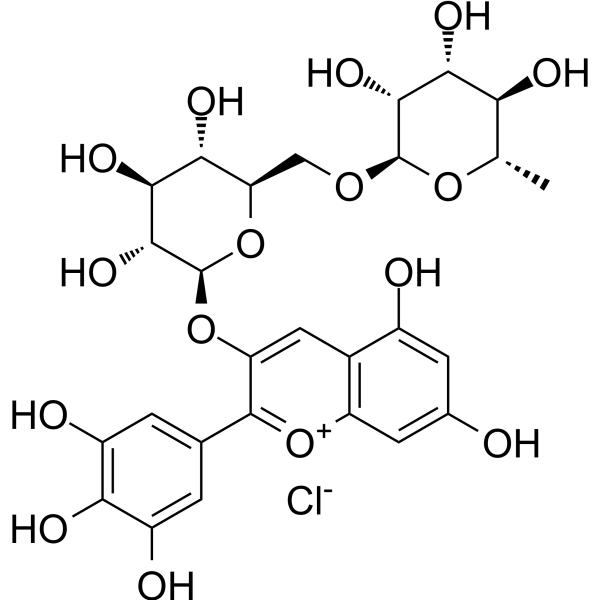
Synonyms: Delphinidin 3-O-rutinoside chloride
Delphinidin 3-rutinoside chloride is an anthocyanin component. Delphinidin 3-rutinoside chloride is isolable from the fruits of blackcurrant Ribes nigrum L. Delphinidin 3-rutinoside chloride activates the ETB receptor and stimulates the NO/cGMP pathway. Delphinidin 3-rutinoside chloride increases cyclic guanosine monophosphate production and reduces the phosphorylation level of Myosin regulatory light chain. Delphinidin 3-rutinoside chloride stimulates GLP-1 secretion. It significantly induces relaxation of bovine ciliary muscle strips contracted by ET-1 and inhibits ET-1-induced contraction of bovine ciliary muscle strips. Delphinidin 3-rutinoside chloride is applicable to research related to type 2 diabetes .
Cat. No.: HY-108786
CAS No.: 1174277-80-5
Purity:  97.88%
Synonyms: ENB-0040

Target:  

Phosphatase

Research Areas:  

Metabolic Disease

Asfotase alfa (ENB-0040) is a bone-targeted genetically engineered glycoprotein. Asfotase alfa increases the survival rate, bone mineralization and bone length and prevents mineralization defects of the feet, rib cage, lower limbs, jaw bones in Akp2 / knockout mice. Asfotase alfa can be used for the research of perinatal, infantile, and juvenile-onset hypophosphatasia (HPP) .
Cat. No.: HY-E70042
CAS No.: 9025-44-9
Target:  

Endogenous Metabolite

Research Areas:  

Metabolic Disease

Nucleoside hydrolase (IAGNH) is a glycosidase. Nucleoside hydrolase (IAGNH) catalyzes the cleavage of the N-glycosidic bond in nucleosides to enable the recycling of the nucleobases and Rib .
Cat. No.: HY-W142457
CAS No.: 18479-58-8
Dihydromyrcenol is an orally active flavor ingredient and Antifungal agent. Dihydromyrcenol acts as a toxicant. Dihydromyrcenol induces phototoxicity-related growth inhibition in Bakers' Yeast. In pregnant rats, Dihydromyrcenol causes threshold maternal toxicity by reducing feed consumption and body weight gain, and also induces threshold developmental toxicity by decreasing fetal body weight, inhibiting ossification of metatarsal bones in the hind paws, increasing the number of extra thoracic vertebrae ribs, and altering vertebral counts .

